

The Downside Tasuki Gap candlestick pattern is a three-candle formation that appears during a downtrend and is traditionally interpreted as a bearish continuation signal.
The pattern consists of two bearish candles separated by a downside price gap, followed by a bullish candle that moves back into the gap without completely closing it. The incomplete recovery is what gives the pattern its bearish interpretation.
However, the pattern should not be treated as proof that a stock will continue falling. Technical analysis signals can fail, and historical testing has found that the downside Tasuki Gap does not always behave as its traditional textbook interpretation suggests.
This guide explains how the pattern forms, how to identify it, what it may indicate, how it differs from similar candlestick formations, and its key limitations.
.candlestick-dropdown { margin: 25px 0; padding: 18px 20px; background: #F7F9FC; border: 1px solid #DCE5F0; border-radius: 10px; font-family: inherit; } .candlestick-dropdown label { display: block; margin-bottom: 9px; font-size: 16px; font-weight: 600; color: #34495E; } .candlestick-dropdown select { width: 100%; max-width: 700px; padding: 13px 16px; font-size: 16px; line-height: 1.5; color: #34495E; background-color: #FFFFFF; border: 1px solid #B8C9DD; border-radius: 7px; cursor: pointer; outline: none; appearance: auto; transition: all 0.2s ease; } .candlestick-dropdown select:hover { border-color: #8FAFD0; background-color: #FBFCFE; } .candlestick-dropdown select:focus { border-color: #8FAFD0; box-shadow: 0 0 0 3px rgba(143, 175, 208, 0.18); } .candlestick-dropdown select option { color: #34495E; background: #FFFFFF; } @media (max-width: 600px) { .candlestick-dropdown { margin: 20px 0; padding: 15px; } .candlestick-dropdown label { font-size: 15px; } .candlestick-dropdown select { width: 100%; padding: 12px 14px; font-size: 15px; } } .candlestick-dropdown { background: #f8fafc; border: 1px solid #e2e8f0; border-radius: 10px; padding: 18px 20px; margin: 25px 0; } .candlestick-dropdown label { display: block; font-size: 17px; font-weight: 600; color: #334155; margin-bottom: 10px; } .candlestick-dropdown select { width: 100%; padding: 12px 14px; font-size: 15px; color: #334155; background-color: #ffffff; border: 1px solid #cbd5e1; border-radius: 7px; cursor: pointer; outline: none; transition: border-color 0.2s ease, box-shadow 0.2s ease; } .candlestick-dropdown select:hover { border-color: #94a3b8; } .candlestick-dropdown select:focus { border-color: #94a3b8; box-shadow: 0 0 0 3px rgba(148, 163, 184, 0.15); } .candlestick-dropdown option { background: #ffffff; color: #334155; padding: 10px; }What Is the Downside Tasuki Gap Candlestick Pattern?
The Downside Tasuki Gap is a three-candle bearish continuation pattern that traditionally forms within an existing downtrend.
Its basic structure is:
| Candle | Typical Formation | What It Shows |
|---|---|---|
| First | Bearish candle | Existing selling pressure |
| Second | Bearish candle that gaps lower | Selling pressure continues |
| Third | Bullish candle that enters the gap but does not fully close it | Buyers recover some ground, but the gap remains partly open |
The important feature is the unfilled portion of the gap between the first two candles.
According to Thinkorswim, the pattern is identified when the first two candles are bearish, the second gaps down from the first, and the third candle is bullish and closes within the gap rather than completely eliminating it.
Where Does It Fit in Candlestick Analysis?
The Downside Tasuki Gap belongs to the broader family of candlestick continuation patterns.
If you’re learning candlestick analysis more broadly, FinFormula’s types of candlestick patterns resource can provide useful context on how individual formations are categorized.
The pattern’s traditional interpretation is different from a bearish reversal pattern because it is expected to occur after a decline has already begun.
How the Downside Tasuki Gap Forms
The pattern develops in three main stages.
1. The First Candle Is Bearish
The first candle forms during an existing downtrend and closes below its opening price.
It represents continued selling pressure.
A strong bearish candle can make the pattern visually clearer, but the larger context matters more than simply looking for a large red candle.
2. The Second Candle Gaps Down
The second candle is also bearish and opens below the relevant price range of the first candle, creating a visible downside gap.
This gap is an important part of the pattern.
It suggests that sellers have pushed the market lower quickly enough to create separation between the first and second candles.
3. The Third Candle Is Bullish
The third candle moves upward and attempts to recover some of the decline.
This can initially look bullish because buyers have entered the market.
However, the traditional Downside Tasuki Gap requires the third candle to close without completely filling the gap created between the first two candles.
That incomplete recovery is what preserves the bearish continuation interpretation. TradingView similarly describes the pattern as a downtrend formation where the bullish third candle enters the gap but fails to close it completely.
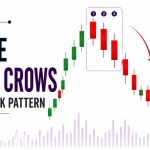


Downside Tasuki Gap Example
Consider a hypothetical stock that is already trending lower.
Suppose:
- Day 1 closes at $100 after opening at $105.
- Day 2 opens below Day 1’s relevant low and closes at $91.
- Day 3 opens within the second candle’s body and rallies to $96.
- The rally still does not completely eliminate the gap between the first two candles.
The third candle shows that buyers are attempting a recovery, but the gap remains partly open.
Under the traditional interpretation, this suggests that sellers may still have control and that the broader downtrend could resume.
This is a hypothetical illustration, not a prediction of what a real stock will do.
What Does the Downside Tasuki Gap Indicate?
Traditionally, the pattern is interpreted as a sign that a prevailing downtrend may continue.
The reasoning is straightforward:
- Sellers are already controlling the trend.
- A second bearish candle creates a downside gap.
- Buyers attempt to recover on the third candle.
- Buyers fail to completely close the gap.
- The incomplete recovery is interpreted as evidence that bearish pressure remains.
The third candle is therefore important because it represents a test of the downside gap.
If buyers cannot completely overcome that area, traditional candlestick analysis treats the remaining gap as a potential resistance zone.
That interpretation is why the pattern is classified as bearish continuation rather than bullish reversal.
How to Identify a Valid Downside Tasuki Gap
A practical checklist can help avoid confusing ordinary price movement with the pattern.
Look for these characteristics:
- An existing downtrend
- A bearish first candle
- A second bearish candle
- A downside gap between the first and second candles
- A bullish third candle
- The third candle moves into the gap
- The third candle does not completely close the gap
The prior trend is particularly important.
TA-Lib notes that the classical Tasuki Gap pattern assumes a prior trend, but its pattern-recognition function does not independently verify that trend. That means traders need to evaluate the broader price structure rather than treating the three candles as sufficient by themselves.
Don’t Identify It From the Candles Alone
A three-candle sequence that resembles the pattern does not automatically mean the market is in a meaningful downtrend.
Before interpreting the formation, consider:
- The broader trend
- Recent price structure
- Support and resistance
- Trading volume
- Market conditions
- Whether the gap is meaningful
- What happens after the third candle
This broader approach is consistent with using price action trading rather than relying on one isolated candlestick formation.


Downside Tasuki Gap vs. Downside Gap Three Methods
These two patterns can look very similar, which makes the distinction important.
Both formations involve:
- A bearish trend
- Two bearish candles
- A downside gap
- A bullish third candle
The key difference is what happens to the gap.
| Feature | Downside Tasuki Gap | Downside Gap Three Methods |
|---|---|---|
| Trend | Downtrend | Downtrend |
| First candle | Bearish | Bearish |
| Second candle | Bearish with gap down | Bearish with gap down |
| Third candle | Bullish | Bullish |
| Gap after third candle | Remains partly open | Gets completely closed |
| Traditional interpretation | Bearish continuation | Bearish continuation |
The Downside Tasuki Gap requires the third candle to leave part of the gap unfilled.
In the Downside Gap Three Methods pattern, the third candle closes the gap. CandleScanner specifically identifies the closed gap as the distinguishing feature between the two formations.
That difference is small visually but important when classifying the pattern.
Downside Tasuki Gap vs. Other Bearish Candlestick Patterns
The Downside Tasuki Gap is only one of many bearish candlestick formations.
For example, a bearish engulfing candlestick pattern uses two candles and focuses on the second candle engulfing the previous candle’s real body.
The Downside Tasuki Gap is different because it depends heavily on:
- A prior downtrend
- A price gap
- Three candles
- A partial gap fill
Similarly, the falling three methods candlestick pattern is another bearish continuation formation, but its structure is based on a different sequence of candles and consolidation within an existing decline.
The broader lesson is that candlestick patterns should be identified by their complete structure, not simply by whether the candles look bullish or bearish.
How Traders Can Use the Downside Tasuki Gap
The traditional use of the pattern is to look for potential continuation of an existing downtrend.
However, the pattern is better viewed as a setup for further analysis rather than an automatic trading signal.
1. Confirm the Existing Trend
First determine whether price is actually trending lower.
Look for evidence such as:
- Lower highs
- Lower lows
- Sustained downward price movement
- Weakness relative to recent trading ranges
A pattern that appears during sideways trading may have a very different meaning from one that develops during a strong decline.
2. Examine the Gap
The gap is central to the pattern.
Ask whether the second candle actually created a meaningful gap and whether part of that gap remains open after the third candle.
If the entire gap is closed, the setup no longer fits the traditional Downside Tasuki Gap definition.
3. Wait for Price Confirmation
Rather than assuming the third candle guarantees continuation, traders may look at what price does afterward.
For example, renewed selling pressure after the third candle may provide stronger evidence than the pattern alone.
Other forms of confirmation can include:
- A move below a recent swing low
- Weakness after testing resistance
- Increased selling volume
- Confirmation from broader price structure
No single confirmation method guarantees that a trade will work.
4. Consider Risk Before Taking Action
A bearish pattern does not mean downside is unlimited.
Price can reverse, fill the gap, or move sideways after the pattern appears.
Any trading decision should therefore consider:
- Potential entry level
- Invalidating price level
- Position size
- Potential loss
- Nearby support
- Overall market conditions
The goal is not to predict the market with certainty but to manage uncertainty.


Why the Downside Tasuki Gap Can Fail
The biggest mistake is assuming that a textbook pattern automatically produces the textbook outcome.
Markets do not have to follow candlestick interpretations.
A Downside Tasuki Gap can fail when:
- The broader trend is weak
- Buyers regain control
- The gap is completely filled
- Price breaks above important resistance
- The pattern forms near a major support level
- A broader market rally lifts the stock
- News changes the underlying outlook
- Trading volume does not support the move
A particularly important failure condition is a complete gap fill.
If the bullish third candle completely closes the gap, the structure no longer represents the traditional Downside Tasuki Gap.
Limitations of the Downside Tasuki Gap
This is where traders should be especially careful.
It Is Not a Guaranteed Bearish Signal
The textbook interpretation says the pattern indicates bearish continuation, but that does not mean every occurrence will be followed by a decline.
TA-Lib’s documentation highlights an important historical finding: Bulkowski’s testing found the downside Tasuki Gap acted as a bullish reversal 54% of the time, rather than behaving as the expected bearish continuation pattern.
That finding is a strong reason not to use the pattern as a standalone signal.
It Requires Context
The same three candles can have different implications depending on where they appear on a chart.
A formation during a strong downtrend is different from a similar formation:
- Near major support
- After an extended selloff
- During sideways consolidation
- Around major news
- In a highly volatile market
Gaps Are Market-Dependent
The usefulness of gap-based candlestick patterns also depends on the market and timeframe.
Markets that trade continuously may show fewer traditional gaps than markets with regular trading sessions and overnight breaks.
For this reason, the pattern should be evaluated in the context of the specific security and timeframe rather than assumed to have identical meaning everywhere.
Candlestick Patterns Do Not Explain Why Price Moved
A candlestick shows price behavior, not the complete cause behind that behavior.
A gap can occur because of:
- Earnings news
- Economic data
- Company announcements
- Market-wide events
- Changes in investor expectations
- Overnight developments
Understanding the underlying context can therefore be important before interpreting the pattern.
Common Downside Tasuki Gap Mistakes
Mistake 1: Ignoring the Existing Downtrend
The pattern is traditionally a continuation formation, so the preceding trend matters.
Don’t label every three-candle sequence as a Downside Tasuki Gap without examining the broader chart.
Mistake 2: Treating the Third Candle as a Bullish Reversal
The third candle is bullish, but that does not automatically make the entire formation bullish.
Its role in the pattern is to test the gap.
The key question is whether it completely closes that gap.
Mistake 3: Entering Solely Because the Pattern Appeared
A candlestick formation should generally be considered alongside other evidence.
A pattern by itself cannot account for:
- Market-wide conditions
- Company-specific news
- Support and resistance
- Volume
- Volatility
- Risk tolerance
Mistake 4: Confusing It With Downside Gap Three Methods
The distinction comes down largely to whether the third candle completely closes the gap.
Always inspect the actual price relationships rather than relying only on the visual appearance.
Mistake 5: Assuming Historical Behavior Guarantees Future Results
Even if a pattern has worked under certain historical conditions, that does not guarantee the same outcome in future markets.
Historical testing should be treated as evidence, not certainty.
Downside Tasuki Gap Trading Checklist
Before interpreting the pattern, ask:
- Is there a clear downtrend?
- Are the first two candles bearish?
- Did the second candle gap lower?
- Is the third candle bullish?
- Does the third candle move into the gap?
- Does some of the gap remain unfilled?
- Is price near a major support level?
- What is trading volume doing?
- Has the broader market changed direction?
- Is there another technical signal confirming or contradicting the setup?
- Where would the pattern be considered invalid?
- Is the potential downside large enough to justify the risk?
This checklist helps turn pattern recognition into a broader analysis process.
Frequently Asked Questions
Is the Downside Tasuki Gap bullish or bearish?
The Downside Tasuki Gap is traditionally classified as a bearish continuation pattern. It appears during a downtrend and consists of a downside gap followed by a bullish candle that does not completely close the gap.
How many candles are in a Downside Tasuki Gap?
The pattern consists of three candles: two bearish candles followed by a bullish candle that partially retraces into the gap.
What happens if the third candle closes the entire gap?
If the third candle completely closes the gap, the formation no longer meets the traditional definition of a Downside Tasuki Gap. It may instead resemble a Downside Gap Three Methods pattern.
Is the Downside Tasuki Gap reliable?
It should not be considered reliable on a standalone basis. Historical testing cited by TA-Lib found that the downside Tasuki Gap acted as a bullish reversal 54% of the time, which runs counter to its traditional bearish-continuation interpretation.
Is the Downside Tasuki Gap a reversal pattern?
No. Its traditional classification is bearish continuation, not reversal. However, real-world outcomes can differ from the textbook interpretation.
What is the opposite of a Downside Tasuki Gap?
The opposite formation is the Upside Tasuki Gap, which is traditionally interpreted as a bullish continuation pattern. FinFormula has a dedicated Upside Tasuki Gap candlestick pattern resource for comparison.
Can the Downside Tasuki Gap be used by itself?
It is generally better to use it as one part of broader technical analysis rather than as a standalone decision signal. Trend, price structure, volume, support and resistance, and subsequent price action can all provide additional context.
Does the Downside Tasuki Gap work in every market?
Not necessarily. Its usefulness can vary by market, timeframe, liquidity, and how frequently meaningful price gaps occur. The pattern should be evaluated in the context of the specific market being analyzed.
Final Takeaway
The Downside Tasuki Gap candlestick pattern is a three-candle formation traditionally associated with bearish continuation.
Its defining structure is:
Bearish candle → bearish gap-down candle → bullish candle that partially fills but does not completely close the gap.
The pattern is interesting because the third candle shows buyers attempting to recover, while the remaining gap suggests that the recovery has not completely overcome the previous selling pressure.
But that textbook interpretation should not be confused with a guaranteed forecast. Historical evidence cited by TA-Lib suggests the downside Tasuki Gap can produce outcomes opposite to its traditional bearish interpretation.
For that reason, the most useful way to approach the pattern is as one piece of technical evidence, alongside the broader trend, price structure, support and resistance, volume, market conditions, and subsequent confirmation.
Candlestick patterns can help organize what price is doing, but they cannot eliminate market risk or predict the future with certainty.
This article is for educational purposes only and is not individualized investment or trading advice.


3 thoughts on “Downside Tasuki Gap Candlestick Pattern: Meaning, Strategy & Real Trading Examples”